
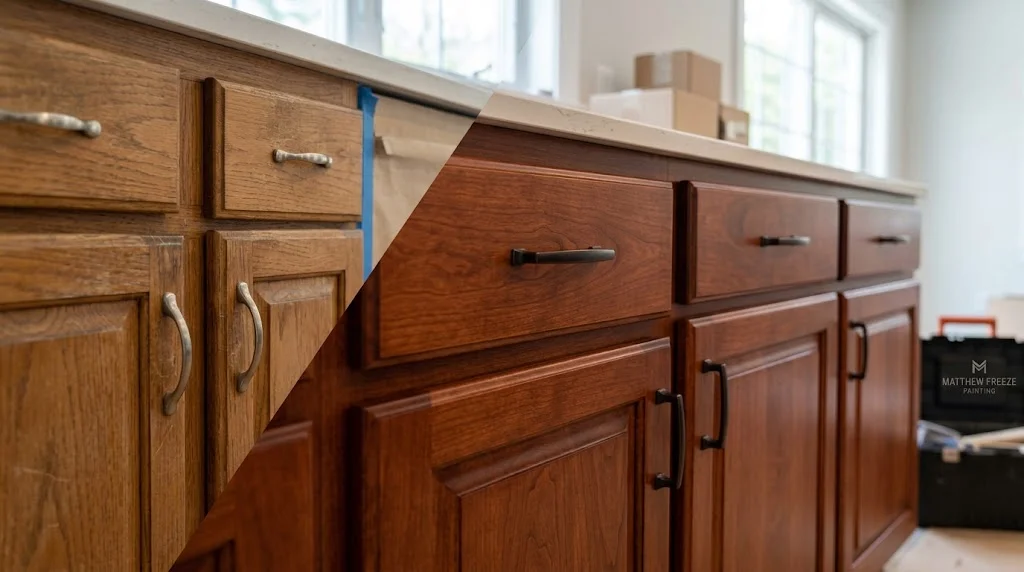
A full kitchen remodel can turn daily life upside down for weeks. Cabinet refinishing offers a more practical path when your cabinets are solid but their finish looks worn, dull, or dated. At Matthew Freeze Painting, we restore wood cabinetry with careful prep and lasting finishes that bring warmth back into your home.
When Refinishing Makes Sense
Cabinet refinishing works best when the cabinet boxes and doors remain structurally sound. Good doors should open properly, frames should feel stable, and the wood should not have deep moisture damage or severe warping.
Cabinet refinishing allows homeowners to preserve cabinets with quality craftsmanship that may be difficult or expensive to replace. Many older homes have solid wood cabinetry with details that newer stock cabinets do not offer. Those cabinets may look tired today, yet their bones can still be in great condition.
Scratches around handles, faded stain near sinks, light water marks, and a worn sheen do not always call for replacement. A professional refinishing project can address surface wear and renew the protective finish. It can also help you update the color while keeping the natural beauty of the wood visible.
This route makes sense for kitchens, bathroom vanities, laundry rooms, built-in shelving, and office cabinetry. If the cabinet layout works for your household, refinishing can help you get more years from the space without knocking down walls.
Cabinet Refinishing Preserves Natural Wood
Wood cabinets often bring warmth and depth into a room. Grain patterns, knots, and small variations give wood a character that paint covers completely. Cabinet refinishing lets those natural features remain part of the finished design.
Cabinet refinishing can bring out the richness of wood that has been hidden beneath dull topcoats or years of daily wear. A fresh stain may deepen the existing tone, lighten a dated shade, or give the cabinets a more balanced appearance.
The best finish depends on the wood species, the room’s lighting, existing floors, countertops, and your preferred style. Oak, maple, cherry, and other woods can react differently to stains and clear coats. An in-person assessment helps us recommend finishes that work with your specific cabinets.
A refinished cabinet door should still look like wood, only cleaner and better cared for. You can see the grain, feel the smooth surface, and appreciate the craftsmanship that was there all along.
Matthew Freeze Painting offers cabinet refinishing as a way to preserve original woodwork, enhance durability, and restore the natural look of existing cabinetry.
The Cabinet Refinishing Process
A durable finish comes from the steps that happen before the final topcoat. Cabinet refinishing involves careful preparation, patience between coats, and attention to the small details that people notice every day.
First, we assess the cabinet condition and discuss the look you want. We review the material, existing stain or finish, damaged areas, hardware, and the room’s overall style. That conversation helps shape the right plan for your project.
Next, we remove doors, drawers, and hardware as needed for proper surface access. This allows us to work more evenly around edges, corners, and profiles. It also gives cabinet frames the attention they need without cutting corners.
Then, we clean the cabinet surfaces to remove grease, residue, grime, and other buildup. Kitchens are full of invisible cooking oils, and those oils can interfere with the new finish. Proper cleaning makes a bigger difference than most people realize.
Sanding follows cleaning because the wood needs a smooth surface with the right texture for the next products. We address rough spots, worn edges, minor dents, and existing finish issues before moving into staining or finish application.
Once the surface is ready, we apply the selected stain or finish system. This may include several coats and appropriate drying time between each stage. A protective topcoat helps guard the cabinet surface against moisture, stains, and routine use.
After the finish has dried and cured, we reinstall the doors, drawers, and hardware. The room starts looking like itself again, only much better than it did before the project began.
Why Preparation Cannot Be Rushed
Cabinet refinishing is a finish project, not a quick cover-up. The cabinets in your home deal with fingerprints, steam, food splatters, heat, cabinet pulls, and years of opening and closing. Those surfaces need thorough preparation before a new finish can perform well.
Cabinet refinishing begins with removing the old surface contaminants that affect adhesion. A cabinet door can look clean while still holding enough grease to cause problems under a new coating. That is why proper cleaning comes before sanding, staining, or sealing.
Sanding is another major part of the process. It helps remove failing finish material and smooths the surface while preparing the wood for the products applied next. Skipping it can lead to uneven color, rough texture, or a coating that does not hold up.
This is where a professional approach earns its keep. A rushed weekend project can leave dust in the finish, inconsistent stain absorption, or rough areas around raised panels and decorative edges. Those flaws have a way of standing out every time you make coffee or reach for a plate.
Our team treats cabinet surfaces with the patience needed for a refined finish. Each stage supports the next one, and the final result depends on doing the early work well.
Stain And Sheen Options
The stain and sheen you select can change how the entire room feels. A lighter finish can help a kitchen feel more open, while deeper stain tones can bring warmth and contrast to a larger room.
Cabinet refinishing gives you options beyond restoring the original color. You can choose a stain that fits updated flooring, new countertops, fresh wall paint, or a different overall design direction. The finished look should feel connected to the room rather than dropped in from another house.
Water-based stains often dry faster and have a lower odor. Oil-based stains can create rich color and durable results. Gel stains are thicker and can provide a more even appearance on certain surfaces. The right choice depends on the cabinet material, existing finish, and appearance you want.
Sheen also affects both looks and upkeep. Matte finishes reduce shine, while satin offers a soft, low-luster look that works well in many homes. Semi-gloss adds durability with more reflection, and gloss creates a brighter surface that shows more light.
We help homeowners consider the practical side of every option. Kitchen cabinets get frequent use, so the selected finish needs to look good while standing up to regular cleaning and daily life.
Cabinet Refinishing Or Cabinet Painting
Cabinet refinishing and cabinet painting can both transform cabinetry, but they are not the same service. Refinishing keeps the wood grain visible, while painting covers the grain with a solid new color.
Cabinet refinishing is a strong fit when the natural wood has character worth preserving. Original solid wood cabinetry can often benefit from a new stain and protective topcoat. This approach can feel especially right in homes with traditional details, historic features, or wood flooring that pairs well with visible grain.
Cabinet painting works well when you want a greater shift in color and style. It can help turn dark cabinetry into a brighter kitchen or bring a bold color to an island, vanity, or built-in. Paint covers the wood grain, which may suit a more modern design goal.
Neither approach is automatically better. The best option comes down to the material, condition, desired look, and how you want the room to feel once the work is finished.
Matthew Freeze Painting can help you compare painting and refinishing options during an estimate. We look at what you already have and explain the approach that makes the most sense for your home.
Cabinet Refinishing For More Than Kitchens
Kitchens get most of the attention, but cabinetry appears throughout many homes. A worn bathroom vanity can make an otherwise clean bathroom feel dated. Built-in bookcases can lose their appeal when the stain looks dry or scratched.
Cabinet refinishing can update laundry room storage, mudroom cabinets, home office built-ins, bathroom vanities, and entertainment centers. These pieces may not face the same cooking residue as kitchen cabinets, but they still deal with frequent contact and everyday wear.
A refinished bathroom vanity can make a modest bathroom feel more polished without replacing the countertop or redoing plumbing. Built-ins can regain their presence in a living room or study with a finish that complements the walls and flooring.
Older homes can benefit greatly from this work. Original cabinetry often carries details that match other woodwork in the house. Refinishing allows you to keep that character while making the space feel maintained and usable.
We also provide interior painting, exterior painting, historical renovation, commercial painting, and window glazing services for properties throughout Virginia and Maryland. Visit our full services page to see the ways we can help refresh your property.
What Affects Project Timing
Cabinet refinishing takes time because the materials need time. Preparation steps, stain absorption, drying periods, curing, and the size of the cabinet layout all affect the project timeline.
A small vanity may take only a few days. A larger kitchen with many doors, drawers, raised panels, and repairs can take longer. The finish type also plays a role because some products need more time between coats.
We discuss the anticipated schedule before work begins, so you have a practical picture of what to expect. We want you to know how long the kitchen or bathroom may be affected and when the cabinets can return to normal use.
You may need to adjust your daily routine during the project, especially for a kitchen. That inconvenience is temporary, and careful scheduling helps limit the disruption. A little patience during the refinishing process can save you from a much longer remodel later.
Cabinet refinishing typically takes anywhere from a few days to a couple of weeks, depending on the project size, finish complexity, and drying time between coats.
Professional Work Makes A Visible Difference
Cabinet refinishing often looks easier online than it is in real life. Videos can make sanding, staining, and sealing look like a relaxed Saturday project. The camera rarely shows the dust, uneven stain, missed edges, or the cleanup that comes afterward.
Professional refinishing gives you a process designed for a consistent finish. We prepare the surfaces, select products suited to the project, and apply each coat with care. We also protect nearby floors, counters, and walls while the work is in progress.
A high-quality finish should look smooth across cabinet faces and around edges. It should feel even to the touch and work with the room’s design. The best result does not call attention to flaws. It lets the cabinetry look like it always belonged there.
We work with homeowners who want more from their existing cabinetry without the cost and mess of replacement. Cabinet refinishing can offer that fresh start while preserving the materials that still serve the space well.
See completed residential, commercial, interior, exterior, and historic projects in our work gallery.
Caring For Refinished Cabinets
A refinished cabinet surface can stay in good condition with simple, consistent care. Use a soft cloth and mild cleaner for routine cleaning, and wipe spills before they have time to sit on the finish.
Avoid harsh scrub pads, strong chemical cleaners, and abrasive products that can dull or scratch the protective coating. Pay close attention around handles, sink cabinets, and lower doors where moisture and daily contact are most common.
It also helps to use cabinet hardware rather than opening doors by pulling on the edges. Handles and pulls keep fingers off the finish and reduce wear over time. Small habits can make a real difference in how long a cabinet finish keeps its fresh appearance.
If you spot a chip, scratch, or water concern, contact a professional before the damage spreads. Early attention can protect the finish and help prevent moisture from reaching the wood beneath it.
FAQs
What Is Cabinet Refinishing?
Cabinet refinishing restores an existing cabinet surface through cleaning, sanding, staining, and protective sealing. It preserves the wood grain while improving the cabinet’s appearance and durability.
Is Cabinet Refinishing Cheaper Than Replacing Cabinets?
In many cases, refinishing costs less than full cabinet replacement because it uses your current cabinetry. It can also reduce the time, demolition, and material waste connected with a full remodel.
Can You Refinish Cabinets With Water Damage?
Minor surface wear may be repairable, but severe swelling, warping, or deep water damage can require more extensive repair. We inspect the cabinets during an estimate and recommend the best next step.
How Long Does A Refinished Cabinet Finish Last?
A professionally applied finish can provide years of use when the cabinets receive proper care. The lifespan depends on the cabinet material, prep work, finish system, daily use, and cleaning habits.
Can You Change The Color During Cabinet Refinishing?
Yes, refinishing can include a new stain color that changes the tone of the wood. The final result depends on the species of wood, existing finish, and how the stain interacts with the surface.
Do You Refinish Bathroom Vanities And Built-Ins?
Yes, we refinish kitchen cabinets, bathroom vanities, laundry room storage, built-ins, and other wood cabinetry. We tailor the preparation and finish process to the material and the way the space is used.
Let Your Cabinets Shine Again
Your cabinets may need a new finish, not a full replacement. Schedule an estimate with Matthew Freeze Painting and bring lasting warmth back into your home.