
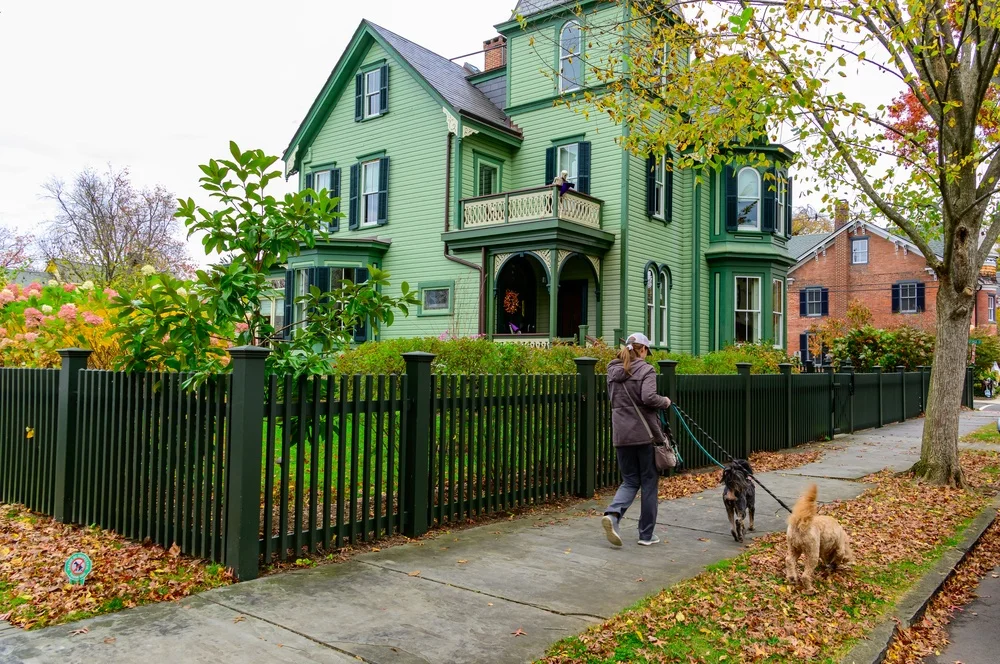
Historic homes carry a lot of character, and the paint needs to respect that. The wrong color can feel off fast, while the right one keeps the house looking steady and cared for. When you pick paint colors for historic homes, durability and fit matter just as much as style.
Paint Colors For Historic Homes
Choosing paint colors for historic homes starts with the building itself. Older homes often have trim, siding, and details that were built to stand out in a certain way. A color that works on a newer house can look out of place on a historic one.
We always recommend looking at the home in natural light before making decisions. Morning shade, afternoon sun, and cloudy weather can change how a color reads. That matters a lot when the house already has strong architectural details.
Historic homes often do best with colors that feel rooted, not trendy. Soft whites, weathered grays, muted greens, and warm earthy tones can suit older materials well. These shades tend to age better because they stay in step with the home’s character.
Start With The Architecture
The architecture should lead the color choice, not the other way around. Decorative trim, porch railings, window casings, and shutters all deserve a second look before painting begins. Those details help guide which paint colors for historic homes will feel natural.
Some homes need high contrast to make the trim stand out. Others look better with lower contrast and a quieter finish. The age, style, and condition of the home usually give away which direction makes sense.
We also look at neighboring homes when helping with exterior choices. The goal is not to copy what is next door, but to make sure the house feels at home on its own street. That little bit of context can save a lot of regret later.
Weather And Wear
Long-lasting paint colors for historic homes need to handle weather as well as appearance. Coastal sun can fade darker shades faster than many people expect. Moisture and humidity can also dull softer tones if the wrong products are used.
That is why finish and prep matter so much. A color can look great on a swatch and still fail on a worn surface. When the base coat and prep work are done right, the paint holds its look longer.
Older homes also deal with surface changes over time. Wood moves, caulk cracks, and small repairs leave uneven spots behind. Paint colors for historic homes need to look good even as the house keeps aging in a natural way.
Color Choices That Hold Up
The best paint colors for historic homes usually have a little depth to them. Pure bright colors can feel harsh on older architecture, especially in strong sunlight. Softer, layered shades tend to give the home a richer and more balanced appearance.
Trim often works well in creamy whites or muted off-whites. Body colors can lean toward sage, slate, sand, or dusty blue depending on the home’s age and setting. Those choices tend to stay appealing because they feel calm rather than loud.
We also think about how a color will look after a few seasons outside. A shade that looks good only when fresh may not be the best long-term pick. A more grounded tone often keeps its appeal longer and ages with less drama.
Historic Character Matters
Historic homes already have a story built into them, so paint should support that story. The best paint colors for historic homes usually highlight trim lines, porch details, and window shapes without overwhelming them. That balance gives the house a cleaner, more thoughtful look.
Sometimes homeowners want a bold update, and that can work when it is handled carefully. Even then, it helps to stay within a palette that feels true to the age of the house. A little restraint goes a long way with older properties.
If you want to see how thoughtful exterior work comes together, take a look at our our work page. It shows the kind of care historic homes often need when color and surface work have to line up. Those projects usually look best when the whole exterior feels intentional.
Prep Supports Color
Paint colors for historic homes will only look as good as the surface under them. If old paint is peeling or wood is damaged, the color will not sit evenly. Prep work gives the new finish a better chance to hold up and look right.
That prep often includes scraping, sanding, caulking, and small repairs. On older homes, those steps matter even more because the surfaces have already been through years of weather. Skipping them tends to show up fast once the paint dries.
We also take time to look at problem areas around windows and trim. Those spots often need extra care before new paint goes on. The better the prep, the better the color will age.
Helpful Color Habits
-
Test swatches in both sun and shade.
-
Compare colors against trim and roof tones.
-
Keep the home’s age in mind before deciding.
-
Pick shades that still look good after fading.
-
Use finish types that fit the surface and climate.
These habits help narrow the field before the first coat goes up. They also keep the project from feeling rushed or random. Historic homes reward careful choices.
Our services page gives a better look at how we help with exterior painting and related work. We focus on finishes that hold up and colors that suit the home’s style. That combination matters when the house has already earned its character over time.
FAQs About Paint Colors For Historic Homes
What makes paint colors for historic homes different?
Historic homes have older details and materials that react differently to color. The right shade should fit the architecture and age of the house. It also needs to hold up well outdoors over time.
Should historic homes use bright colors?
Bright colors can work in some cases, but they often feel too sharp on older homes. Softer, deeper tones usually fit better. The best choice depends on the house’s style and setting.
How do I test paint colors before committing?
Put sample colors on several parts of the exterior. Check them in morning light, afternoon sun, and shade. That helps you see how the color really reads during the day.
Why does prep matter so much on older homes?
Older homes often have peeling paint, wood wear, and failed caulk. Those issues affect how the new color looks and lasts. Good prep gives the paint a much better foundation.
Can trim and body colors be different?
Yes, and that often works well on historic homes. Trim can highlight the architecture while the body color keeps things balanced. The key is making sure the tones work together.
How can I get help with my historic home?
Ready to pick paint colors for historic homes that fit your house for the long haul? You can schedule an estimate with Matthew Freeze Painting to talk through your color ideas. We also share project inspiration on Instagram.